
A little preparation.
A lifetime to talk about.
What happens before the camera comes out, while we are together, and after the conversation ends.
 01 / 06
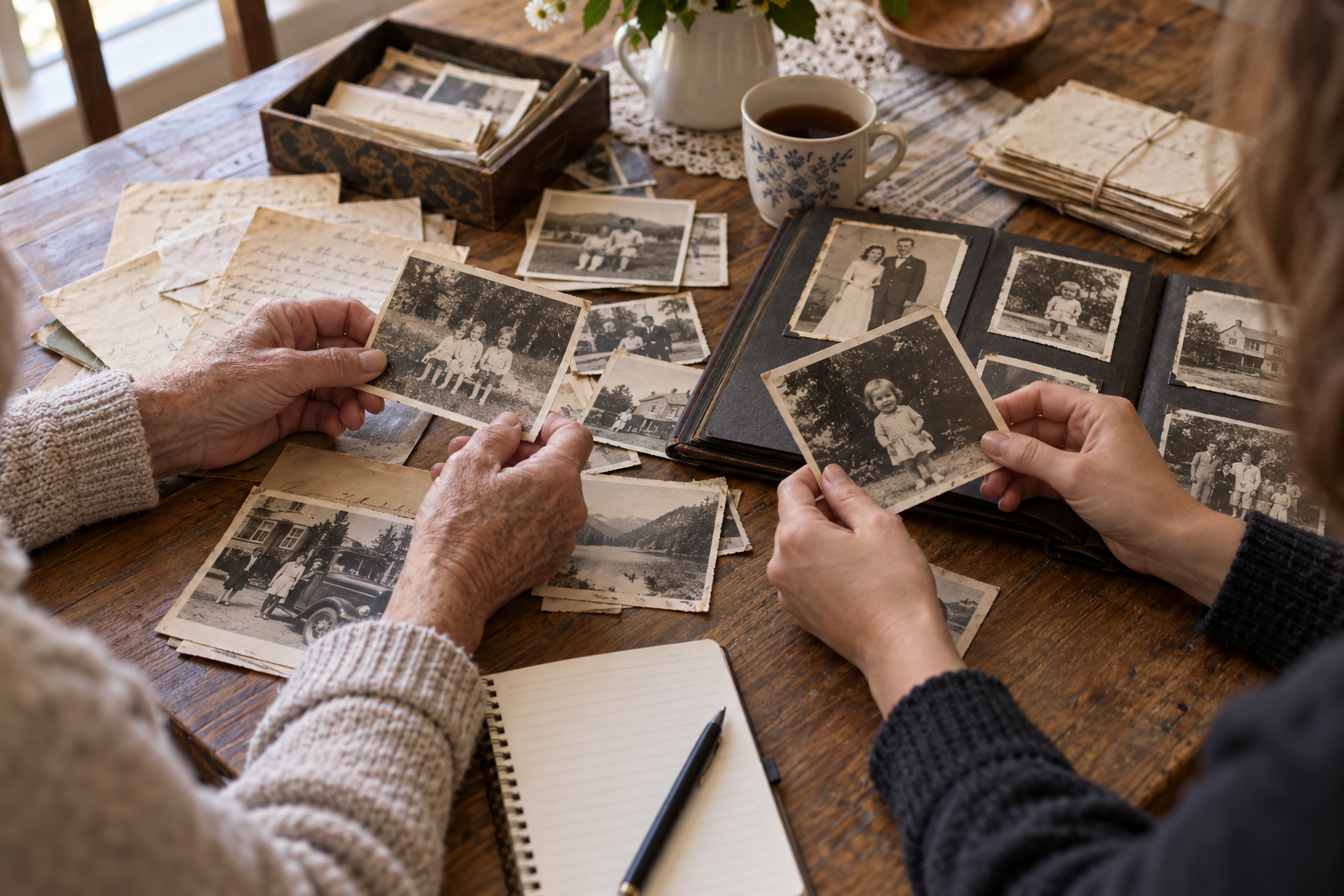
Start with a box of memories.
You do not need to organize an entire lifetime. Begin with a few things that bring a memory back: a photograph, a letter, a recipe in familiar handwriting, or an object that has stayed in the family.
- Choose photographs with a story behind them, not just the most polished pictures.
- Jot down names, places, and approximate dates while they are fresh in your mind.
- Keep a small list of the memories you would most like to hear in their own words.
 02 / 06
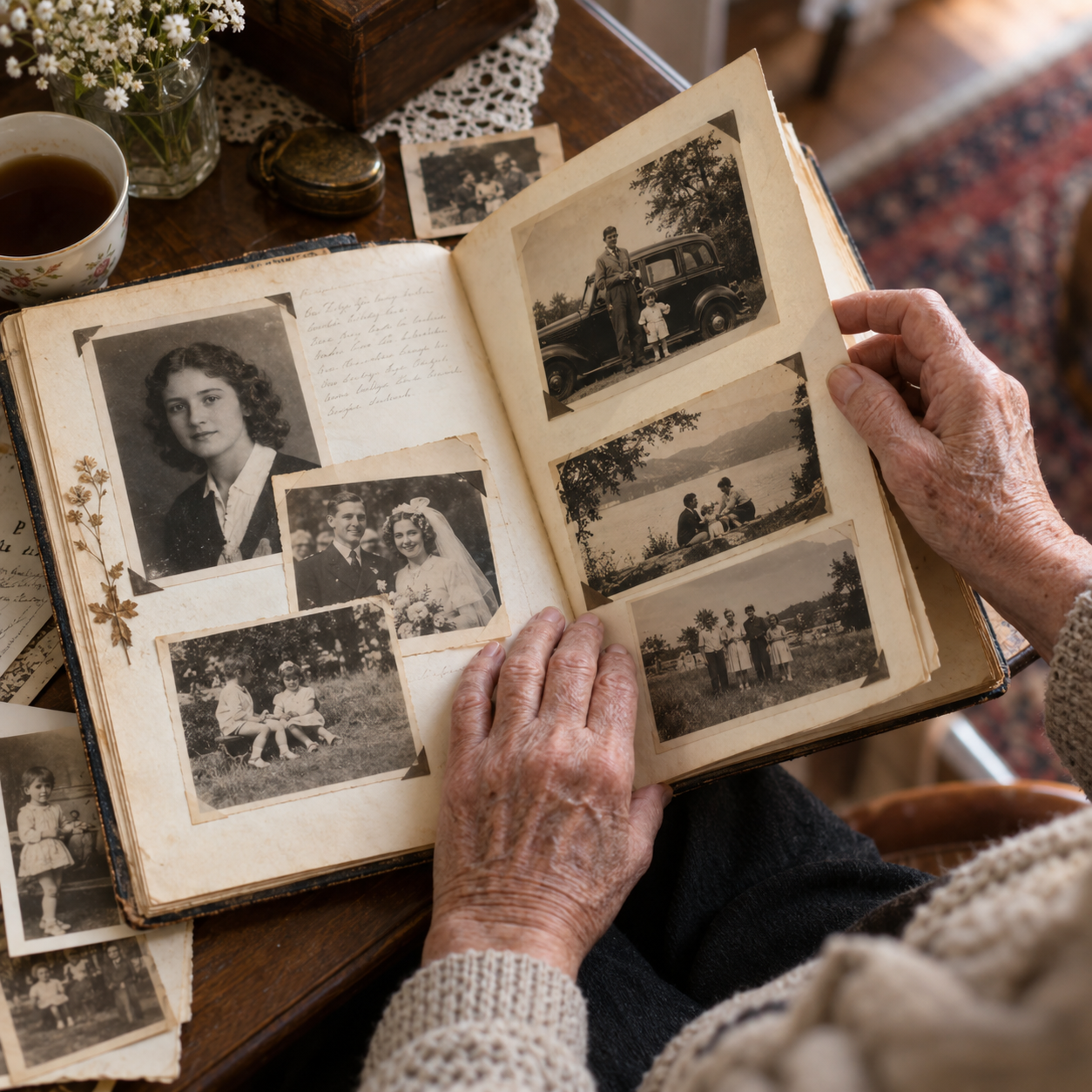
Make space for the questions.
We begin by talking about the person whose story we are preserving. What do you already know? What have you always wanted to ask? Those conversations help us find a direction without turning the interview into a script.
- Think about chapters: childhood, home, friendships, work, love, and family traditions.
- Tell us about the people and moments that should not be missed.
- Let us know if there are subjects they would rather keep private.
 03 / 06
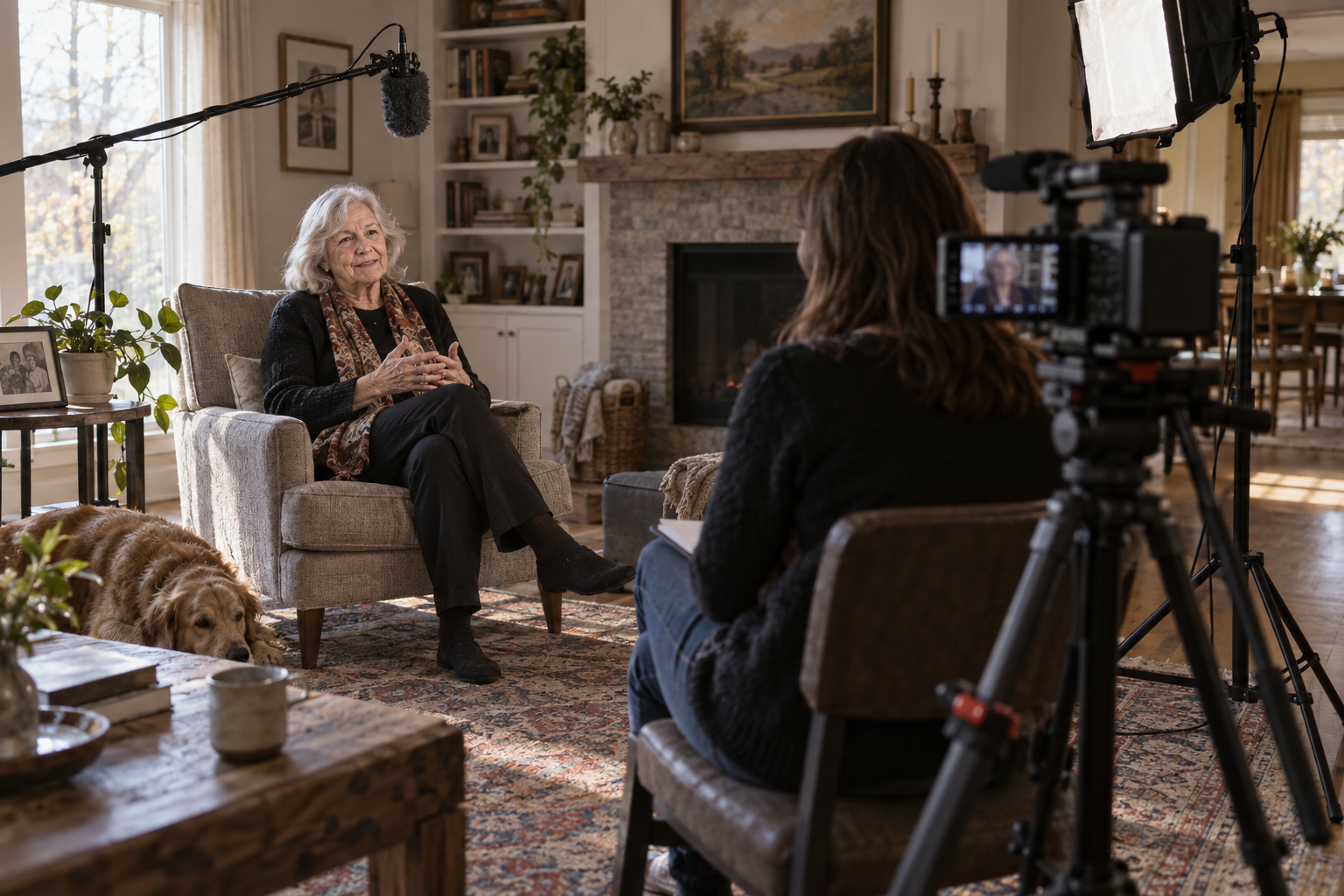
Let home feel like home.
The setting is part of the story. A favorite chair, a familiar room, or family photographs nearby can make the conversation feel personal. We work out the camera, light, and sound around the interview.
- Think of a comfortable place where the person enjoys sitting and talking.
- Keep the photographs and keepsakes you selected within easy reach.
- Notice everyday sounds—televisions, phones, or nearby activity—that could interrupt a recording.
 04 / 06
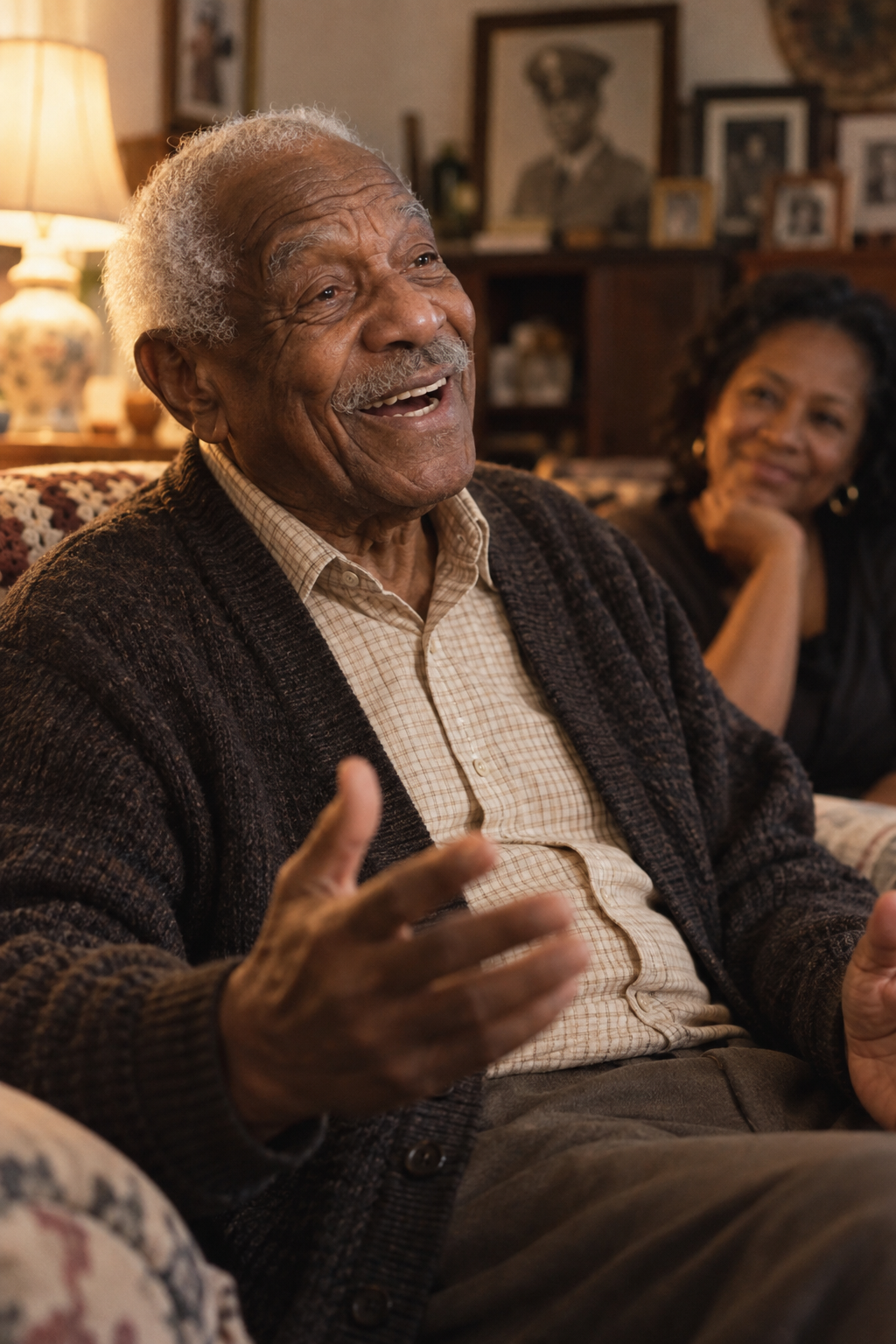
A conversation, one memory at a time.
We guide the interview with questions and follow the memories as they unfold. Sometimes a photograph brings back a name. Sometimes a small detail leads to a story no one expected. Their natural way of telling it is what makes the film theirs.
- There is no need to memorize answers or speak as though you are giving a speech.
- A pause, a laugh, or time to find the right words can be part of the story.
- Photographs and objects can give the conversation a place to begin again.
 05 / 06
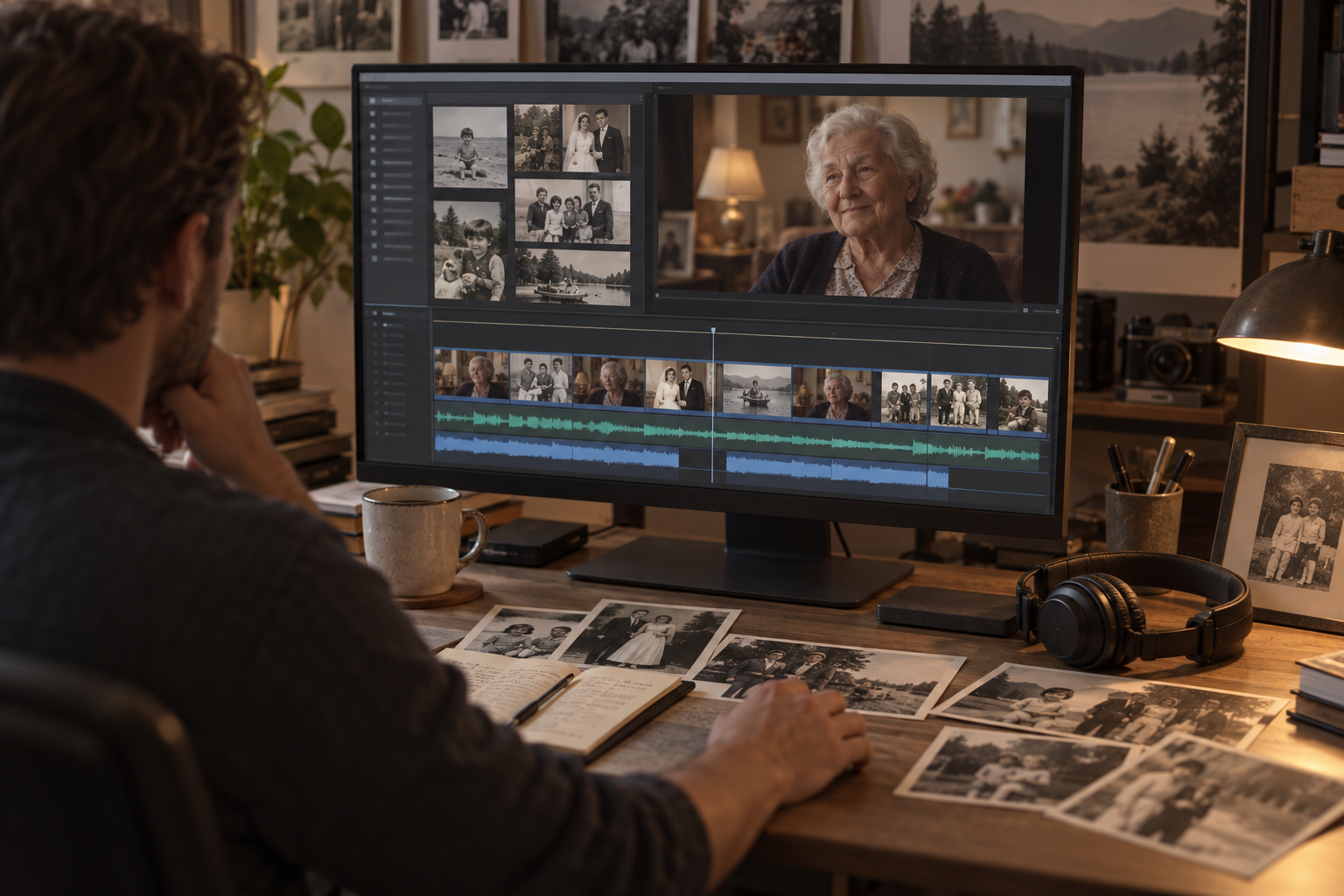
The pieces become a film.
After filming, we bring the interview and family photographs into the edit. We look for the connections between memories and shape them into a documentary that can be followed, felt, and returned to.
- The interview gives the film its voice and direction.
- Family photographs connect the people and places in the story.
- Thoughtful pacing gives both the stories and the quiet moments room.
06 / 06Hear the story together.
The finished documentary brings those conversations and memories together in a film for your family to keep and share. The photographs are still there. Now the voice, expressions, and stories can live alongside them.
When you watch, make a little room for the conversation that follows. A story may bring back another memory, spark a question, or give someone a new way to understand the person they have known all their life.
The photographs. The familiar voice. The stories you will be glad you asked.
Process images are illustrative.